

Deployment Date: May 2026
Project Location: Kwu Tung, Hong Kong SAR
2 min read
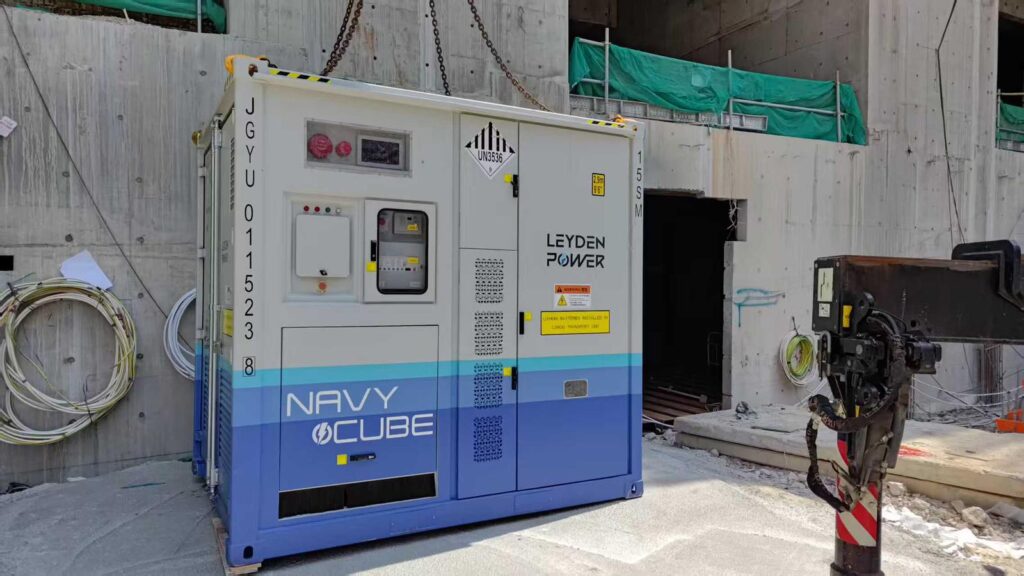
Sun Fook Kong Construction (SFK) and Leyden Power are rethinking how Hong Kong builds. The NAVY CUBE deployments at Kwu Tung North (KTN) is one of the first battery-hybrid power installations on an active public housing construction site in the region.
The administration has accelerated supply targets of public housing units to meet sustained demand. As a priority development zone in the New Territories, KTN is projected to deliver dense residential communities alongside over 50,000 jobs and a full network of civic facilities.
The scale of the project requires power infrastructure to match.
Why Conventional Solutions Fall Short
Contractors developing new urban zones face a consistent obstacle: stable grid connections are rarely available when construction begins. Diesel generators fill that gap — and have done so for decades. But diesel alone carries compounding costs. Running a generator at variable load that is typical across large civil construction, degrades efficiency, burns excess fuel, and accelerates mechanical wear. On a multi-phase project like KTN, those inefficiencies accumulate at every stage.
Space constraints add another layer of difficulty. Hong Kong construction sites leave little margin for oversized equipment. Surrounding residential communities expect low noise levels and reduced emissions. Diesel generators, by default, struggle to meet these conditions.
The Hybrid System for Urban Construction
SFK — with over six decades of operations in Hong Kong — deployed three NAVY CUBE 400 (400 kW/633 kWh) battery energy storage systems running in hybrid mode alongside existing diesel generation. Fitted within a compact footprint, the unit was installed without disruption to active construction workflows.
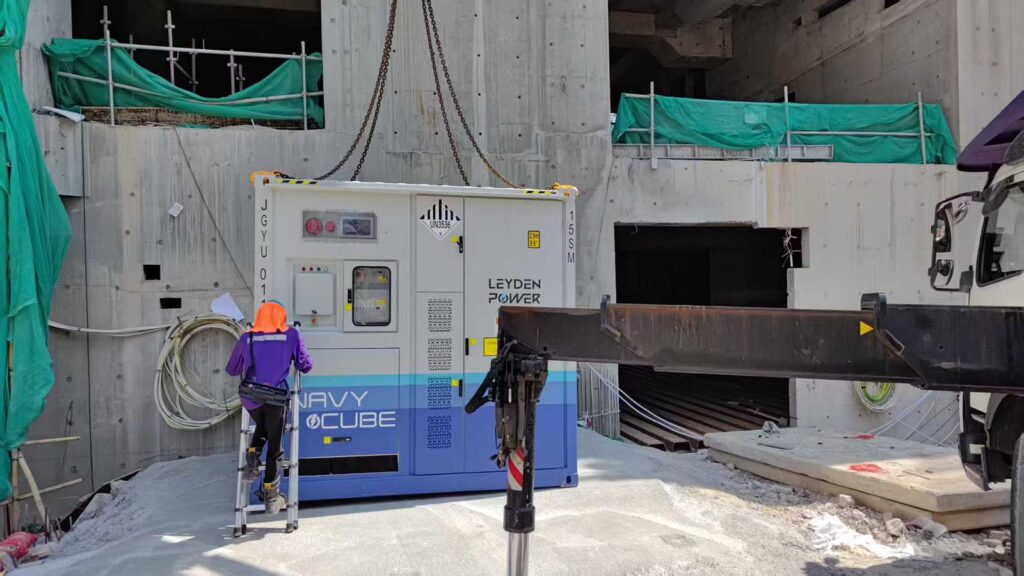
The principle is straightforward. Rather than replacing diesel, the CUBEs work alongside it. The system absorbs demand spikes and covers supply gaps, allowing diesel generators to operate consistently within their most efficient load range. The result is lower fuel consumption, reduced exhaust output, and longer service intervals — without changes to the existing generation setup.
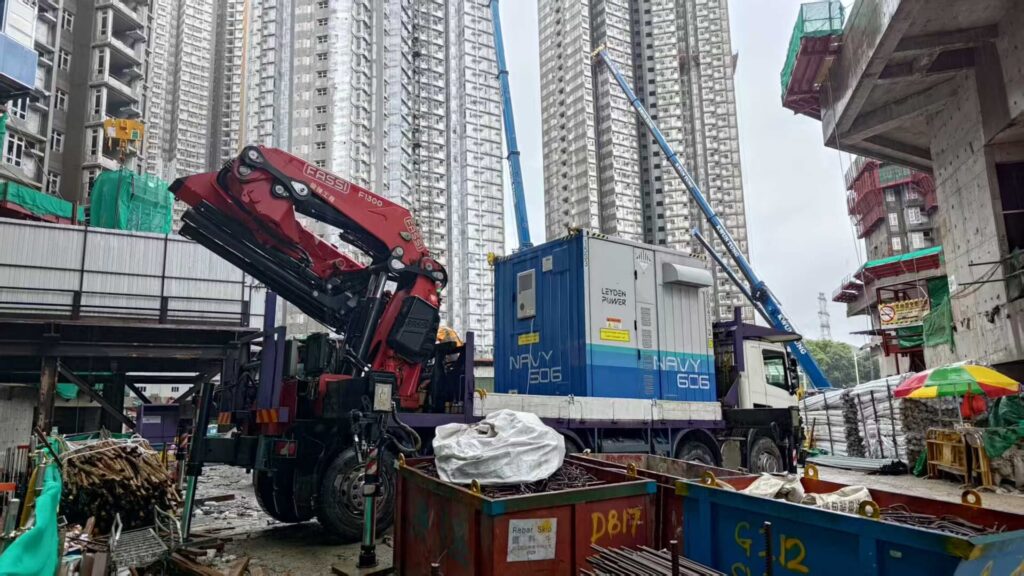
Thank you to Sun Fook Kong (SFK) Construction for working alongside us!
Follow our page for more energy news and connect with our team to explore how BESS could improve operations on your site.


